We begin our term of fantastic voyages with Francis Godwin's 1638 The Man in the Moone, a photocopy of which is in the Whipple Library, or which is available in Cambridge libraries, or online here.
As usual, we meet from 7.30-9pm in the upstairs seminar room of Darwin College - all welcome!
Monday, April 20, 2009

Sunday, April 19, 2009
History of the Book Seminar, Cambridge
Special seminar in conjunction with Trinity College, Cambridge, and the Clark Lectures
Professor Roger Chartier (Directeur d’Études, École des Hautes Études en Sciences Sociales, Paris): ‘Written Culture and Literature in Early Modern Europe. Some propositions.’
7th May, 5pm, Allhusen Room, Trinity College
For more information, contact Daniel Wakelin (dlw22@cam.ac.uk) or Sarah Cain (stc22@cam.ac.uk), or see here.
Professor Roger Chartier (Directeur d’Études, École des Hautes Études en Sciences Sociales, Paris): ‘Written Culture and Literature in Early Modern Europe. Some propositions.’
7th May, 5pm, Allhusen Room, Trinity College
For more information, contact Daniel Wakelin (dlw22@cam.ac.uk) or Sarah Cain (stc22@cam.ac.uk), or see here.
Tuesday, April 07, 2009
Two Cultures: 50 Years On
Panel discussion at the Royal Society
Tuesday 5 May at 6:30pm
Chair: Lord Melvyn Bragg; Speakers: Professor Stefan Collini FBA, Rt.Hon John Denham MP, Ms Sian Ede, Professor Marcus du Sautoy
In May 1959, the British scientist and novelist C P Snow delivered his influential Rede Lecture on 'The Two Cultures'. Its central argument was that a breakdown of communication between the two cultures of modern society - the sciences and the literary - was holding back our ability to tackle the world's problems. The term 'two cultures' persists as shorthand for the notion that there is a damaging rift between science and other types of knowledge. Fifty years on, the Royal Society is hosting a public debate to revisit the two cultures argument and assess its applicability to our situation today. Was the two cultures idea exaggerated at the time? Is it a damaging simplification? Is it relevant today? Are the most important intellectual endeavours those which lie in between or combine different cultures? The panel representing science, humanities, politics and the arts will discuss these and similar questions.
For more information including speaker biographies please visit our website. Admission free – no ticket or advance booking. Doors will open at 5.45pm. Seats allocated on a first-come-first served basis. This event will be broadcast live at royalsociety.org/live. Visit our videoarchive at royalsociety.tv
Tuesday 5 May at 6:30pm
Chair: Lord Melvyn Bragg; Speakers: Professor Stefan Collini FBA, Rt.Hon John Denham MP, Ms Sian Ede, Professor Marcus du Sautoy
In May 1959, the British scientist and novelist C P Snow delivered his influential Rede Lecture on 'The Two Cultures'. Its central argument was that a breakdown of communication between the two cultures of modern society - the sciences and the literary - was holding back our ability to tackle the world's problems. The term 'two cultures' persists as shorthand for the notion that there is a damaging rift between science and other types of knowledge. Fifty years on, the Royal Society is hosting a public debate to revisit the two cultures argument and assess its applicability to our situation today. Was the two cultures idea exaggerated at the time? Is it a damaging simplification? Is it relevant today? Are the most important intellectual endeavours those which lie in between or combine different cultures? The panel representing science, humanities, politics and the arts will discuss these and similar questions.
For more information including speaker biographies please visit our website. Admission free – no ticket or advance booking. Doors will open at 5.45pm. Seats allocated on a first-come-first served basis. This event will be broadcast live at royalsociety.org/live. Visit our videoarchive at royalsociety.tv
Monday, April 06, 2009
HPS seminars
A number of next term's seminars in the HPS department may be of interest to Reading Group members:
1.) Departmental Seminar, Thursday 21st May, 4.30pm
Guy Ortolano (University of Virginia)
The two cultures controversy: science, literature and cultural politics in postwar Britain
This talk will be about my recent book The Two Cultures Controversy: Science, Literature and Cultural Politics in Postwar Britain (Cambridge, 2009). Ever since the scientist-turned-novelist C.P. Snow clashed with literary critic F.R. Leavis in the early 1960s, it has been a commonplace to lament that intellectual life is divided between 'two cultures', the arts and sciences. Yet why did a topic that had long been discussed inspire such ferocious controversy at this particular moment? This talk answers that question by recasting this dispute as an ideological conflict between competing visions of Britain's past, present and future. By excavating the political stakes of the 'two cultures' controversy, this talk seeks to explain the workings of cultural politics during the 1960s more generally, while also revising the meaning of a term that continues to be evoked to this day.
2.) Evolution Reading Group, Thursdays, 1-2pm
21st May, Gillian Beer, Darwin's Plots: evolutionary narrative in Darwin, George Eliot and nineteenth-century fiction (1983), chapters 2 & 3.
4 June, Charles Kingsley, The Water Babies (1863), chapters 1–4.
1.) Departmental Seminar, Thursday 21st May, 4.30pm
Guy Ortolano (University of Virginia)
The two cultures controversy: science, literature and cultural politics in postwar Britain
This talk will be about my recent book The Two Cultures Controversy: Science, Literature and Cultural Politics in Postwar Britain (Cambridge, 2009). Ever since the scientist-turned-novelist C.P. Snow clashed with literary critic F.R. Leavis in the early 1960s, it has been a commonplace to lament that intellectual life is divided between 'two cultures', the arts and sciences. Yet why did a topic that had long been discussed inspire such ferocious controversy at this particular moment? This talk answers that question by recasting this dispute as an ideological conflict between competing visions of Britain's past, present and future. By excavating the political stakes of the 'two cultures' controversy, this talk seeks to explain the workings of cultural politics during the 1960s more generally, while also revising the meaning of a term that continues to be evoked to this day.
2.) Evolution Reading Group, Thursdays, 1-2pm
21st May, Gillian Beer, Darwin's Plots: evolutionary narrative in Darwin, George Eliot and nineteenth-century fiction (1983), chapters 2 & 3.
4 June, Charles Kingsley, The Water Babies (1863), chapters 1–4.
Sunday, April 05, 2009
Easter Term 2009
 This term we embark on an eclectic series of fantastic voyages: we will be carried by migratory birds to meet the man in the moon, fall underground to wonderland, travel to Mars on a magic carpet, and pilot a miniature craft into the vessels of the human body.
Copies of the set readings will be placed in the Science and Literature Reading Group boxfile in the Whipple Library.
We meet on Mondays from 7.30-9pm in the upstairs seminar room at Darwin College – all are welcome to join us for the adventure!
Further details, news/updates and relevant links will be added here over the coming months.
Organised by Melanie Keene (HPS) and Daniel Friesner (Science Museum).
27th April
Francis Godwin, The Man in the Moone (1638)
Online text here.
11th May
Lewis Carroll, Alice’s Adventures Under Ground (1864)
Online text here, and scanned original manuscript here.
18th May
Edwin Lester Arnold, Lieutenant Gullivar Jones: His Vacation (1905)
Online text here.
1st June
Isaac Asimov, Fantastic Adventure II: Destination Brain (1987)
Followed by screening of Fantastic Adventure (1966)
24th June
Trip – late-night opening at the Science Museum
We journey to the wilds of South Kensington…
Thursday, April 02, 2009
Romanticism and Victorianism on the Net - Special Issue
SCIENCE, TECHNOLOGY AND THE SENSES
Edited by Sibylle Erle and Laurie Garrison
We are delighted to announce the release of this special issue of Romanticism and Victorianism on the Net available here.
Contributors to the volume include:
Edited by Sibylle Erle and Laurie Garrison
We are delighted to announce the release of this special issue of Romanticism and Victorianism on the Net available here.
Contributors to the volume include:
- Laurie Garrison and Sibylle Erle, Introduction
- Sibylle Erle, Blake, Colour and the Truchsessian Gallery: Modelling the Mind and Liberatingthe Observer
- Kelly Grovier, 'Paradoxes of the Panoscope': 'Walking' Stewart and the Making of Keats's Ambivalent Imagination
- Laurie Garrison, Imperial Vision in the Arctic: Fleeting Looks and Pleasurable Distractions in Barker's Panorama and Shelley's Frankenstein
- Gavin Budge, The Hero as Seer: Character, Perception and Cultural Health in Carlyle
- Verity Hunt, Raising a Modern Ghost: The Magic Lantern and the Persistence of Wonder in theVictorian Education of the Senses
Thursday, March 19, 2009
Journal of Literature and Science - Review Possibilities
The Journal of Literature and Science, a peer-reviewed, electronically available journal for the interdisciplinary study of literature and science, is seeking new reviews for its next issues. The JLS reviews journal articles in the broad field of literature and science or the cultural history of science published within the year from one volume of the journal to the next (so presently from early-2008 to the present). The Journal does not publish book reviews (other journals do a more than adequate job of this already). Articles can be submitted without prior solicitation from the editors, should be 500-750 words in length, in MLA style, and should be submitted with a copy of the journal article. Publication of reviews is at the discretion of the editors. Reviews on articles of interest to Victorian scholars would be particularly welcome.
The Editor-in-Chief, Martin Willis, would be glad to receive reviews by email to mwillis@glam.ac.uk
The Editor-in-Chief, Martin Willis, would be glad to receive reviews by email to mwillis@glam.ac.uk
Tuesday, March 10, 2009
Darwin's Microscope
 On 9th March the Group organised its first event: Kelley Swain read from her new book of poems, Darwin's Microscope, to great success. A discussion following the poetry-reading gave attendees an opportunity to quiz Kelley on her approach to science and literature, to writing poetry, to works from the history of science, to Charles Darwin himself, and to addressing her work to varied audiences.
Many thanks to Kelley, to Jim Secord, and to Christ's College for all their help! We look forward to organising other events in the near future.
Thursday, March 05, 2009
Next Term - Fantastic Voyages
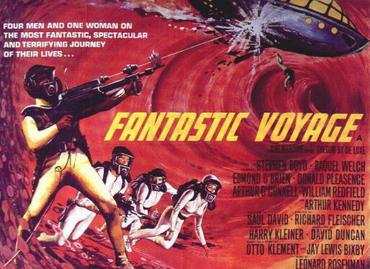
Next term the Reading Group will travel on a series of fantastic voyages. Dates for departure have been provisionally set for Mondays 27th April, 11th and 18th May, and 1st June. We shall embark from the upstairs seminar room of Darwin College, at 7.30pm, and return at approximately 9pm. Further details of our itineraries will be available soon.
Tuesday, March 03, 2009
Subscribe to:
Posts (Atom)