Thursday, February 16, 2017
Workshop - Magic Lanterns and Science
Programme:
9:30-10:15 - Coffee on arrival
10:15-10:30 - Introductory Comments. Sally Shuttleworth (University of Oxford) and Geoff Belknap (Leicester University), Constructing Scientific Communities Project.
10:30-12:00 - Panel 1: Approaches to Science and the Magic Lantern · Iwan Morus (University of Aberystwyth), 'Seeing the Light: Fact and Artefact in Victorian Lantern Culture' · Sarah Dellmann (Utrecht University), 'Images of Science and Scientists: Lantern Slides of Excursions from Utrecht University, NL (c. 1900-1950)' · Emily Hayes (Exeter University), 'Fashioned by physics: the 'scope and methods' of Halford Mackinder's geographical imagination'
12:00-1:00 - Lunch
1:00-2:30 - Panel 2: Magic Lanterns and Museums/Curation · Charlotte New and Meagan Smith (Royal Institution), 'Shedding light on yesterday: Highlighting the slide collections of the RI and relevant preservation' · Frank Gray (Screen archive South-east, Brighton), 'Working with Archive Collections: Development, Access and Historical Context'
2:30-3:00 - Coffee break
3:00-4:30 - Panel 3: Materiality of the lantern · Phillip Roberts (York University), 'Science and Media in the Industrial Revolution: Instrument Makers and the Magic Lantern Trade' · Kelly Wilder (De Montfort University), 'From Lantern Slides to Powerpoint: Photography and the Materiality of Projection' · Deac Rossell (Goldsmiths University), 'Changing Places: Tracking Magic Lantern Culture from Physics to Chemistry to Cinema'
4:30-4:45 - Closing Remarks. Joe Kember and Richard Crangle (Exeter University), Million Pictures Project.
6:15-7:15 - Drinks Reception
7:30-9:00 - Evening lantern show for the general public: · Jeremy Brooker, A Light on Albemarle Street: John Tyndall and the Magic Lantern
Further details here.
Wednesday, February 15, 2017
Our current header: two aeronautical paintings by Louis Joseph Watteau, on display at the Musée de l’Hospice Comtesse, Lille 🖼️🖼️🎈🌬️ pic.twitter.com/uySLvkSBBO— scilit-reading-group (@scilitreadgrp) February 15, 2017
Tuesday, February 14, 2017
'A Naturalist's Valentine', Edward Forbes: https://t.co/KTHq1u24Au #valentines ⛏️🐚#litsci pic.twitter.com/iTTnNGDCEP— scilit-reading-group (@scilitreadgrp) February 14, 2017
Thursday, February 09, 2017
Tuesday, February 07, 2017
20th February - Breath
Our next meeting will take place on Monday 20th February from 7.30-9pm at Darwin College. Once again we will be in the ground floor seminar room in 1 Newnham Terrace, rather than our usual location.
We will be reading:
- Richard Polwhele, ‘The Pneumatic Revellers; An Eclogue’, in Poems (1810), Vol. V, iii-viii and 1-17.
Recap - Atmosphere
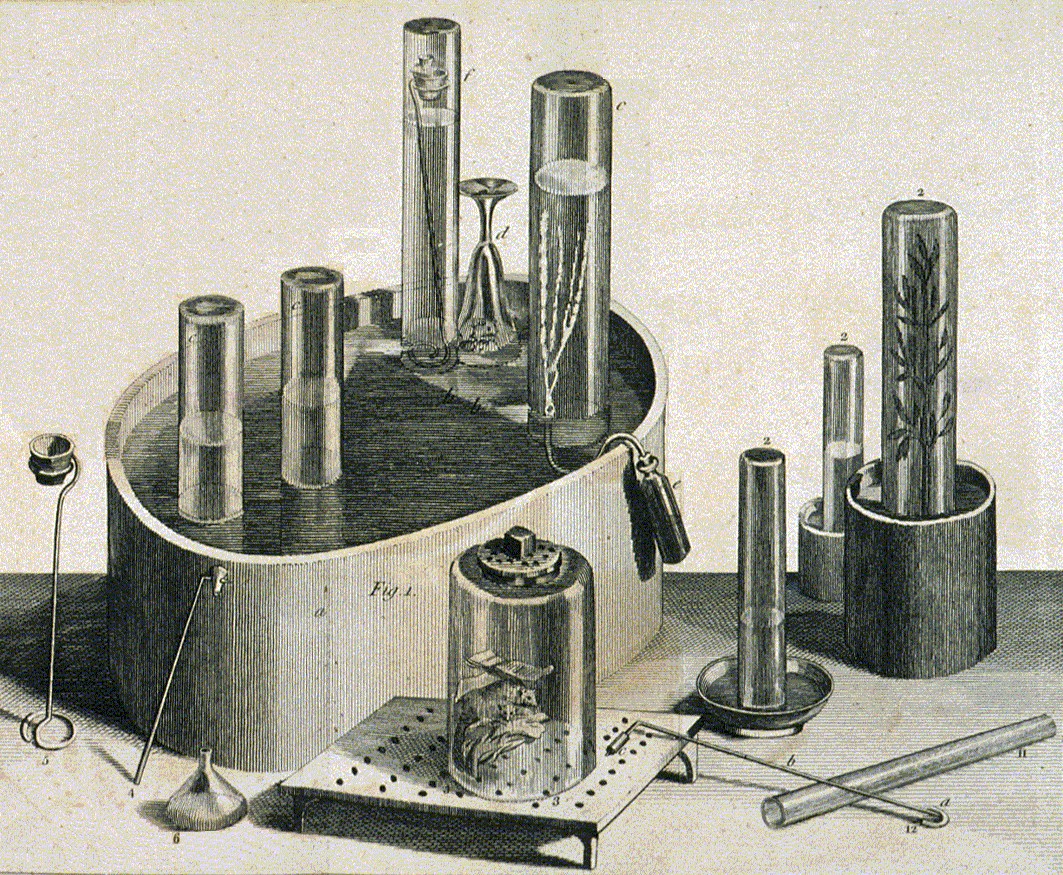
Lent Term began with a suitably sparkling conversation on one of the most important works on air in the history of science, and one of its most interesting characters, Joseph Priestley. In her introduction, Charissa showed the vital role Priestley's Dissenting religious identity played in his life and career, as she traced his biography from England to America via domestic conflagration (perhaps it was too soon to escape last term's theme of fire...). She also gave a brief biography of air, from indivisible classical element to the more complicated understanding of seemingly uniform 'common air' by the eighteenth-century
Our discussion kept returning to the work as a (perhaps slightly fictionalised?) chronicle of the experimental process, guided by sensory experiences, serendipity and an often-surprised narrator. By detailing the apparatus, substances (and creatures), results, and wider ramifications of his researches, Priestley revealed in clear prose how he had been led to his conclusions. His references to other individuals from around Europe demonstrated the interconnectedness of the burgeoning chemical community, and its links to industry. We also thought more generally about chemical language in this period, and the linguistic basis of Lavoisier's reforms in the discipline as providing a new grammar of experiment.
Comparison with Joseph Wright of Derby's An Experiment on a Bird in the Air Pump (1768) showed a different way in which demonstrative experiments were conducted in this period to varied audiences (and eliciting various reactions): a bird, rather than a mouse, is here subjected to a vacuum:
Considering the fate of Priestley's murine experimental subjects led on well to a reading of 'The Mouse's Petition', on behalf of a mouse 'Found in the trap where he had been confined all night by Dr Priestley, for the sake of making experiments with different kinds of air'. These lines in particular seemed to have a contemporary, as well as an eighteenth-century, political as well as a scientific, resonance:
The well-taught philosophic mindNext time we will stick with late eighteenth- and early nineteenth-century pneumatics, but rather than mice being the subject of experimentation on new types of air we will read about what happened when people breathed them in...
To all compassion gives;Casts round the world an equal eye,
And feels for all that lives.
Monday, February 06, 2017
Seminar - Emblematic Alchemy
Tara Nummedal (Brown University) will speak at the History and Philosophy of Science Departmental Seminar on Thursday, 9 February at 3:30pm on:
Emblematic alchemy: Michael Maier's Atalanta fugiens (1617/18)
Tea and biscuits will be available from 3pm in Seminar Room 1
Seminar Location:
Seminar Room 2
Department of the History and Philosophy of Science
Free School Lane
Cambridge
CB2 3RH
Following the talk we will go to the pub, and on to dinner.
All are welcome!
If you would like to join dinner, please contact Daniel Margocsy (dm753@cam.ac.uk).
Emblematic alchemy: Michael Maier's Atalanta fugiens (1617/18)
Written by the German physician, courtier and alchemist Michael Maier, Atalanta fugiens (1617/18) offers its readers an alchemical interpretation of the Classical myth of Atalanta as a series of fifty emblems, each containing an image, motto and epigram (in German and Latin), an accompanying fugue (or canon) for three voices, and a Latin discourse explicating the emblem's alchemical meaning. The parts of each emblem and the 214-page quarto book as a whole are meant to work together, with the music, image and text as an interlocking guide to alchemical theory and to the production of the philosophers' stone. In this talk, I will explore the role of sight and image in Maier's alchemical epistemology and situate his book in the visual culture of early modern European alchemy.
Tea and biscuits will be available from 3pm in Seminar Room 1
Seminar Location:
Seminar Room 2
Department of the History and Philosophy of Science
Free School Lane
Cambridge
CB2 3RH
Following the talk we will go to the pub, and on to dinner.
All are welcome!
If you would like to join dinner, please contact Daniel Margocsy (dm753@cam.ac.uk).
Wednesday, February 01, 2017
6th February - Atmosphere
We will begin our series of aerial discussions on Monday 6th February, from 7.30-9pm in the ground floor seminar room of 1 Newnham Terrace, Darwin College. We will be reading:
- Joseph Priestley, ‘Of Dephlogisticated Air, and of the constitution of the Atmosphere’, from Observations on Various Kinds of Air (1776 2nd edn), Vol. II, 29-61.
Subscribe to:
Posts (Atom)